
Communal Reading
 Are you picturing several people sitting cross-legged on big floor pillows, drinking herbal tea, and reading poetry aloud between gentle yoga stretches? While that sounds appealing (and before I had kids you might have hit the nail on the head with that image), that is not what I mean.
For the past few days I have spent a chunk of my evenings reading Reyna Grande’s memoir, The Distance Between Us, the story of her family’s emigration from Mexico to the U.S. The story is powerfully relevant as the U.S. attempts to deal with large numbers of unaccompanied minors seeking asylum. When Reyna was 2, her father left her hometown of Iguala, Mexico, to find work in the United States. Her mother left Reyna, age 4, and her two siblings for the U.S. two years later, to return to them a single mother. When she was 9 Reyna and her siblings came to the U.S. and after several years the 1986 Immigration Reform and Control Act allowed them to become U.S. citizens. Continue reading “Communal Reading”
 April 7-11, 2014, is
  Have you ever noticed that when you are deeply interested in something, you find ideas about that interest where you aren’t expecting to find them and when you aren’t intentionally seeking that information? If you are open to learning something new, then ideas come to you from sources and settings that may be surprising. I often find myself making connections among concepts from experiences and sources that have little to do with my work. My professional interests in exploring ways to help educators learn new knowledge and skills has launched an ongoing inquiry about collaborative processes for learning that yields discoveries outside the usual places I go to acquire information.
  Last weekend I was reminded of the care and caution needed with raising young Black men.
 This year, my youngest son was admitted into the district Extended Learning Program (ELP), a program for students identified as gifted and talented. Almost immediately upon hearing the news, he remarked, “Wow…I’m the smartest Nyberg, besides you and Dad, of course.” Ever since then, I’ve wondered about the messages we send students in some cases as early as second grade about talent and what it means for those who are not deemed “talented” what that may imply?
 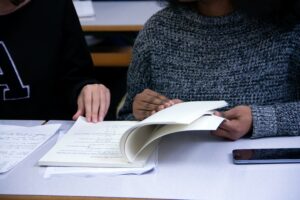 On Monday, the West Wind Education Policy team – including our colleague who telecommutes from 2 hours away – gathered in the West Wind offices for a staff retreat. We do this twice yearly and spend one to two days working together side-by-side. During this retreat we spent the first part of our day focused on our social media strategy for ourselves and our clients and partners. During the afternoon we spent some time discussing how we physically work together and how we could best use our space and the tools we have to make our work stronger and grow our relationships.
  Everybody can be great, because anybody can serve.
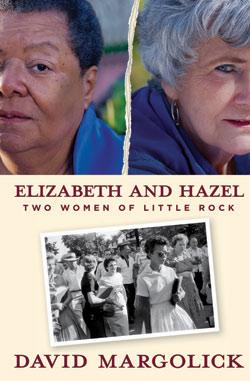 As students enter their school buildings this August, it is timely to think about what the start of the school year was like fifty-five years ago when Elizabeth Eckford and eight other students who were the first black students to enroll in Central High School in Little Rock, Arkansas. I would highly recommend that you read “ELIZABETH AND HAZEL: Two Women of Little Rock” by David Margolick. In this non-fiction book, Margolick describes the events building up to the day that fifteen-year-old Elizabeth was photographed as she was swarmed by an angry mob at the steps of Central High School and tells the story of how this iconic photograph became a symbol of the civil rights movement across the world.