

Peer Coaching
 One of the greatest privileges in my professional life has been the opportunity to learn the discipline of professional learning in education from highly respected researchers who advanced not just the field of professional development (PD) but the broader sphere of educational reform. Beverly Showers, a widely published and internationally recognized researcher, shaped my growth as an educator and supported the design of a comprehensive state-wide system of professional development in Iowa. Our work together resulted in dissemination of multiple state publications and the delivery of workshops across the state on how to implement and sustain the Iowa Professional Development Model (IPDM). Bev concluded from her own research and her knowledge of PD literature that teachers can “acquire new knowledge and skill and use it in their instructional practice when provided with adequate opportunities to learn”[1]. Continue reading “Peer Coaching”
 Have you ever noticed that when you are deeply interested in something, you find ideas about that interest where you aren’t expecting to find them and when you aren’t intentionally seeking that information? If you are open to learning something new, then ideas come to you from sources and settings that may be surprising. I often find myself making connections among concepts from experiences and sources that have little to do with my work. My professional interests in exploring ways to help educators learn new knowledge and skills has launched an ongoing inquiry about collaborative processes for learning that yields discoveries outside the usual places I go to acquire information.
  At my in-law’s annual reunions of the offspring of Danish immigrants who settled in northern Iowa, one can learn a lot about life by listening to the stories about farming. Last year, I heard a retired farmer reminisce about the time he loaded the grain silo on Thorvold’s farm with chopped hay. Because he waited too long to load his crop into the silo, the hay had become so dry that it molded and caused the whole silo to overheat. He had to unload tons of smoldering ash, one shovel full at a time for hours. Grueling work! Time lost! Crop lost!
  Have you given much thought to how you learn? When you are planning learning experiences to help other professionals learn new knowledge and skills, are you using practices that will make a difference?
 The recently sworn-in 113th Congress has the most diverse membership in the history of our country’s government. As 82 new House members and 14 new senators assume their Congressional responsibilities, we will notice new firsts in the gender, racial, and ethnic composition of Congress. For the first time, the majority of House Democrats are made up of women, blacks, Hispanics and other ethnic minorities – almost 60 percent of the Democratic caucus.
  Learning how to speak powerfully about critical educational issues is an essential skill for educators and advocates for students. RESULTS
 I love to sail. I love being out on the water, feeling the power of the wind, watching the sails fill with air and propel the boat across the waves, and being a member of a crew. When sailing with a crew, I am always impressed by the way the sailors work together. Each person knows what they are supposed to do and takes care of their own role, whether it is taking the helm, hoisting the mainsail, bringing across the traveler, trimming the sails to the wind, or hiking out to balance the boat’s weight.
 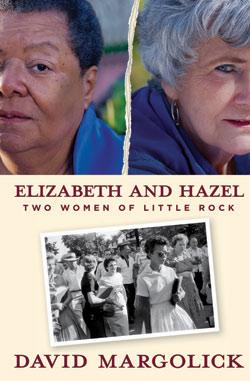 As students enter their school buildings this August, it is timely to think about what the start of the school year was like fifty-five years ago when Elizabeth Eckford and eight other students who were the first black students to enroll in Central High School in Little Rock, Arkansas. I would highly recommend that you read “ELIZABETH AND HAZEL: Two Women of Little Rock” by David Margolick. In this non-fiction book, Margolick describes the events building up to the day that fifteen-year-old Elizabeth was photographed as she was swarmed by an angry mob at the steps of Central High School and tells the story of how this iconic photograph became a symbol of the civil rights movement across the world.